Financial Clarity for Nonprofits
Resilia
A pilot initiative where I translated an ambiguous request into a fully scoped, designed, and shipped financial insights system.
Summary
70% of Resilia's nonprofit cohort, over 100,000 organizations, cite fundraising as their top annual priority. But despite that urgency, many of those same nonprofits lack the basic financial literacy and clarity needed to make sound decisions for long-term sustainability.
I led the UX discovery and design for our Financial Health Score dashboard, a feature that translated complex financial data into a clear, actionable score. It became one of the most meaningful projects I've worked on, and a cornerstone of our 2026 product roadmap.
The Problem
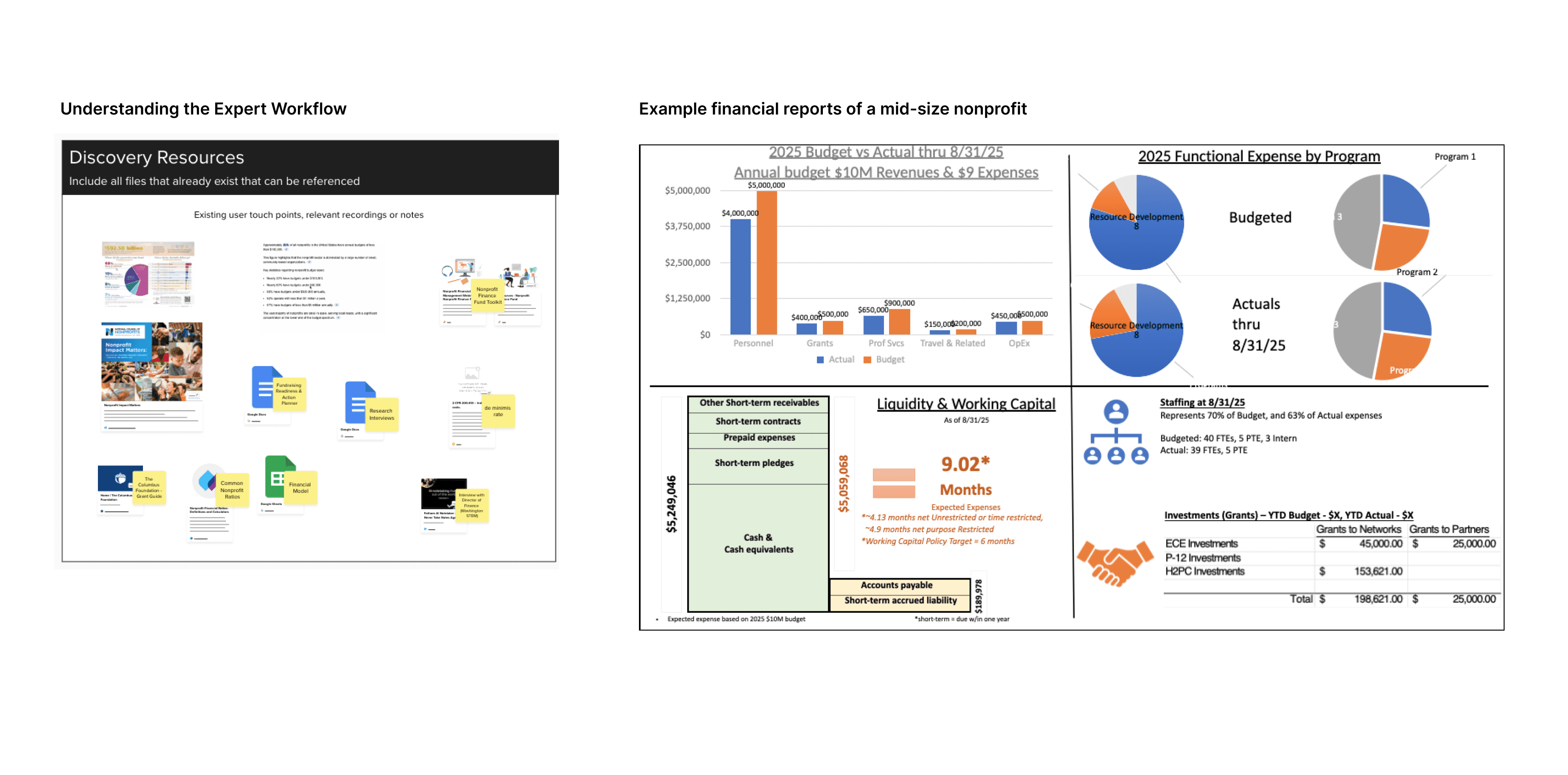
To really understand what was going wrong, I started by talking to people closest to the problem. I interviewed our internal fundraising coach, someone who works directly with nonprofit leaders every day to help them build sustainable revenue strategies. Those conversations were eye-opening.
Key Insights
Lack of Financial Interpretation | No Clear Path to Action |
|---|---|
Many nonprofit leaders have access to financial reports, but lack a clear understanding of what “healthy fundraising” or long-term financial sustainability actually looks like. Unlike small businesses, nonprofits are rarely trained to think in terms of revenue diversification, cash reserves, or financial forecasting. As a result, financial data exists, but meaning does not. | Even when leaders understand their numbers at a surface level, they rarely know what to do next. Smaller organizations, in particular, lack access to financial advisors or strategic planning support. Without contextual guidance, financial insights stall at awareness rather than turning into informed decisions. |
Key insights revealed the core tension: nonprofits did not need more data. They needed interpretation, context, and a clear path forward.
My Approach
There was no existing nonprofit financial health model to work from, so I built one from scratch. I dug into established nonprofit financial metrics through research, cross-referenced them with insights from our subject matter experts, and translated everything into a weighted scoring model that could actually live inside a product experience.
The framework I defined pulled in key indicators: liquidity, revenue diversity, operating reserves, and expense ratios, then assigned weights to each based on their relative importance to long-term sustainability. I also defined the score bands: Excellent, Stable, Monitor, and At Risk. The goal was a system that felt trustworthy and explainable, not like a black box.
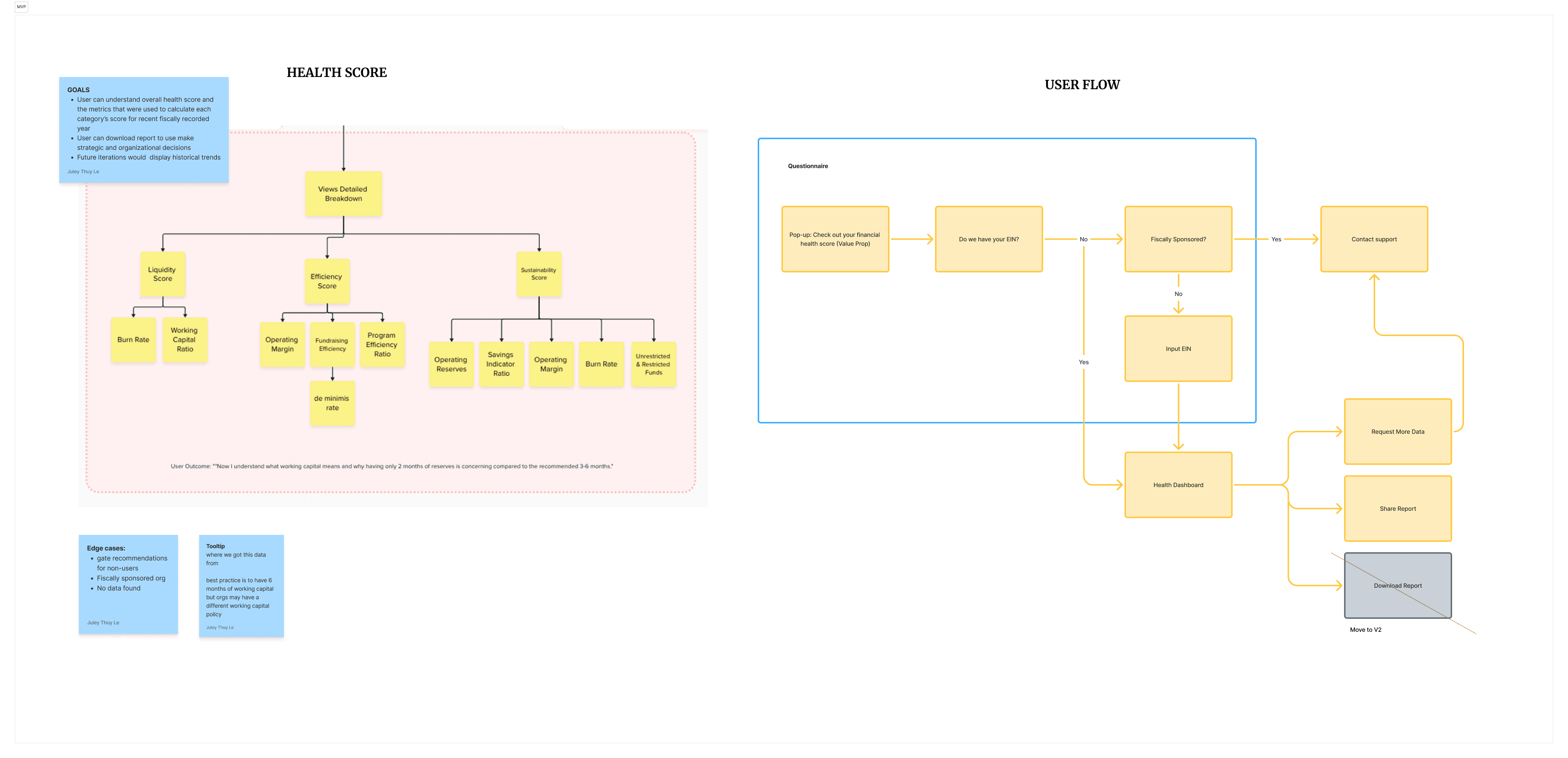
My working hypothesis going in: if we translate complex financial indicators into a standardized, explainable health score with clear breakdowns and guidance, nonprofit leaders will better understand their financial standing and actually take proactive steps toward sustainability.
Designing the Experience
From a strategic standpoint, I wanted the score to feel interpretable, trustworthy, and actionable. A single composite number on its own wasn't enoug. People needed to see how it was calculated, which metrics were dragging it down, and what they could do about it.
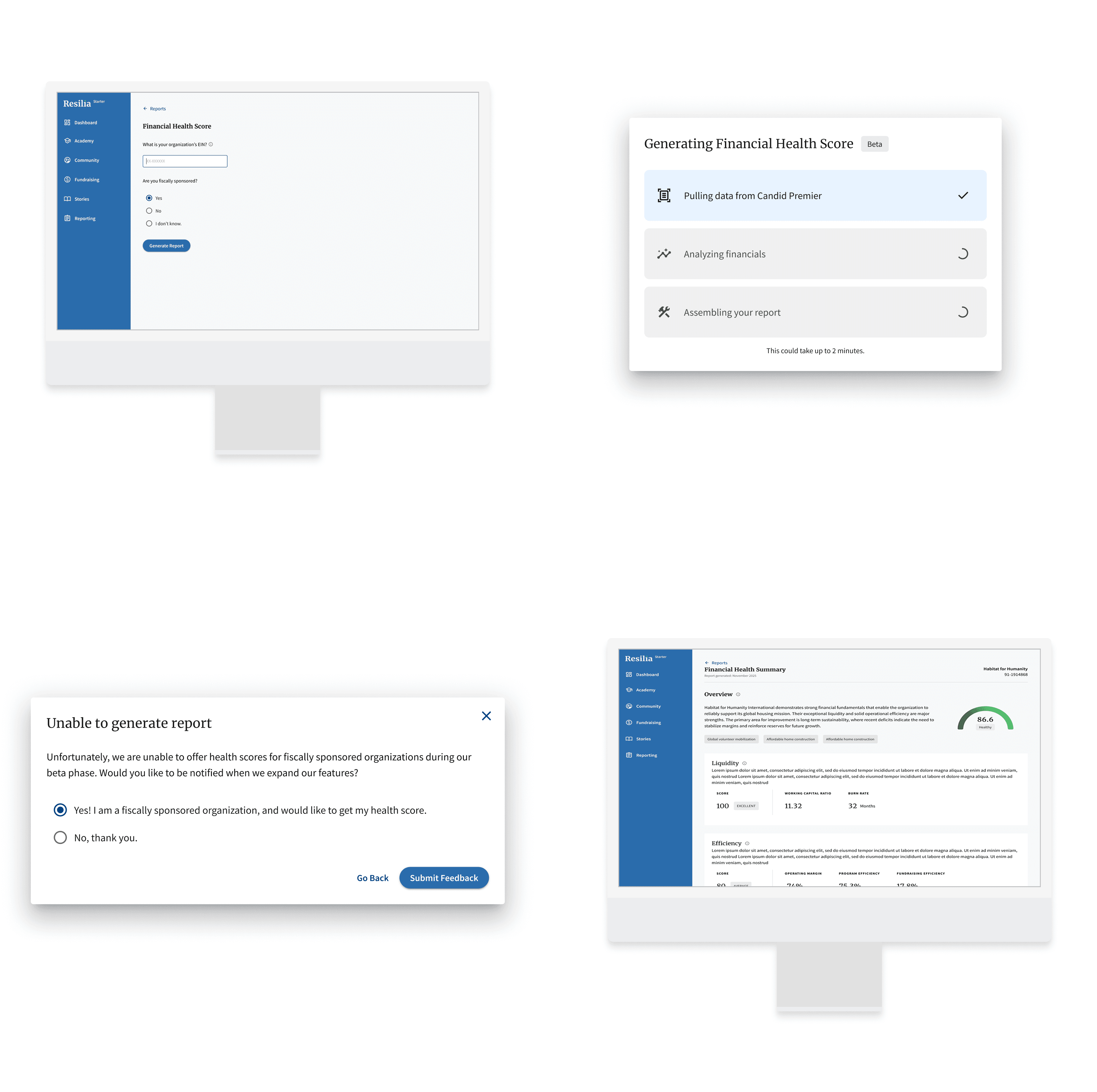
In early low-fidelity explorations, I mapped the full end-to-end flow from data input, through insight generation, all the way to recommended next steps. I tested these flows internally with our fundraising subject matter expert to pressure-test the clarity, financial accuracy, and real-world relevance for the nonprofit leaders we were designing for.
What We Built
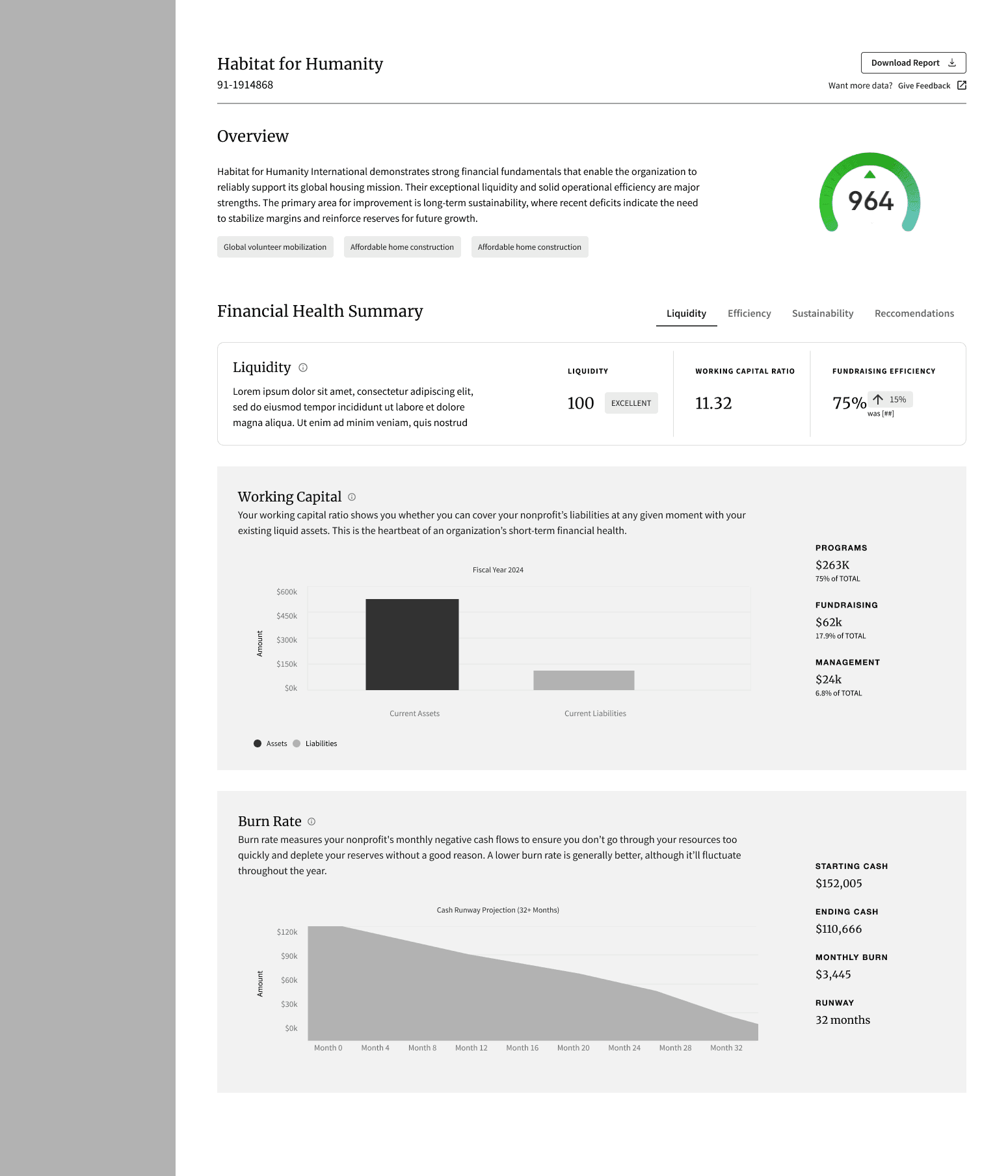
The MVP pulled together several pieces into one cohesive experience:
EIN lookup with automated data ingestion
A calculated Financial Health Score
Transparent metric breakdowns showing how the score was derived
A clearly defined scoring scale (Excellent → At Risk)
Personalized improvement recommendations
An AI-powered report generator built through prompt engineering
This was our first complete end-to-end system for translating complex financial data into clear, supportive guidance, and our first nonprofit financial health score.
Outcome
The results came in fast. Within the first month, 150 scores were calculated, and confidence scores among users went up 35%. That last number mattered most to me. Executive directors without financial backgrounds were walking away feeling equipped to make decisions, not just informed.
Beyond the numbers, the feature shifted something internally too. After years of searching for product-market fit, this renewed both customer and team enthusiasm. It became a cornerstone of the 2026 roadmap and a signal that actionable, AI-powered insights were the right direction for Resilia.
Nonprofits with fewer than 15 staff are now using the tool to assess financial health before making major decisions — accepting grants, hiring, cutting budgets. Finance directors at mid-sized organizations are reporting 30–50% reductions in monthly reporting time. And the leaders who needed it most, executive directors without financial backgrounds, are making decisions with more confidence than before.